
Well Information in Idaho
Residential wells are a common and essential part of property ownership in Idaho, particularly in rural, semi-rural, and developing areas. Unlike properties served by municipal water systems, homes with wells rely on a privately constructed water source governed by state law, technical standards, and long-term maintenance responsibilities.
This page explains what a residential well is, how wells are documented in Idaho, how to obtain official well records, and the rules that apply to both new construction and existing homes.
What Is a Residential Well?
A residential well is a privately constructed groundwater source drilled into an aquifer to supply water for household use. In Idaho, residential wells typically serve:
- Single-family homes
- Rural residences and acreage properties
- Cabins and second homes
- Small subdivisions not connected to municipal water
A well is physical infrastructure (the hole, casing, pump, and pressure system), but it is also tied to legal water-use rules established by Idaho law.
What Is a Well Driller’s Report?
A well driller’s report is an official record created when a well is drilled or modified in Idaho. Licensed well drillers are required to submit this report to the state after completing work on a well.
This report becomes part of the permanent public record for that well and is one of the most important documents for buyers, sellers, and owners to understand.
Information typically found on a well driller’s report
- Well location and identifying information
- Date the well was drilled or modified
- Total depth of the well
- Depth to water at time of drilling
- Casing size, material, and depth
- Grouting and sealing details
- Static water level and yield information (if tested)
- Name and license number of the well driller
While a driller’s report does not guarantee water quality or long-term performance, it provides critical baseline data about how the well was constructed.
How to Obtain a Well Driller’s Report
Idaho maintains a public database of well records. These records can usually be found by searching:
- Property location
- Parcel or legal description
- Owner name
- Well identification number
The official source for well records is the Idaho Department of Water Resources
If a report cannot be located, it does not necessarily mean the well is illegal—but it does mean additional verification may be required.
Well Tags in Idaho
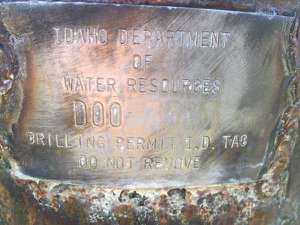 Most legal wells in Idaho are assigned a physical well tag. This tag is typically attached to the well casing or nearby infrastructure and corresponds to the well’s record in the state database.
A well tag generally includes:
- A unique well identification number
- State registration information
Well tags help connect the physical well on the property to its official driller’s report and construction record. Missing or damaged tags are not uncommon on older wells but may require clarification during a transaction.
Rules and Regulations for New Wells
Building a new home with a well in Idaho involves several regulatory requirements:
- Wells must be drilled by a licensed well driller
- Construction must meet state casing, sealing, and setback standards
- A well driller’s report must be filed with the state
- Domestic water use must comply with Idaho water-use laws
Local jurisdictions may also require:
- Setbacks from septic systems and drainfields
- Verification of water availability for building permits
- Additional testing or documentation
Wells drilled improperly or without required documentation can create serious issues for occupancy, financing, and resale.
Rules and Responsibilities for Existing Wells
Owning a property with an existing well carries ongoing responsibilities.
- The well owner is responsible for maintenance and repair
- Pumps, pressure tanks, and controls are private systems
- Water testing is recommended periodically, especially during a sale
- Abandoned or unused wells must be properly sealed
Idaho law requires abandoned wells to be properly decommissioned to protect groundwater resources.
Shared Wells and Special Well Situations
Some properties are served by shared wells or non-standard arrangements.
Shared wells
- Serve more than one home or parcel
- Require written shared well agreements
- Define maintenance, access, and cost-sharing responsibilities
Lenders often require formal shared well agreements before approving financing.
Other well situations
- Multiple wells on one parcel (domestic + irrigation)
- Wells with limited yield requiring storage systems
- Wells located on neighboring parcels with access easements
Each of these situations should be reviewed carefully during due diligence.
Wells, Water Rights, and Common Confusion
A well allows access to groundwater, but it is not the same thing as a water right. In many residential situations, domestic use is authorized under Idaho law, but additional uses may require separate water rights.
Understanding the distinction between physical infrastructure (the well) and legal authority (water use) is essential when evaluating property value and future plans.
Why Well Information Matters in Real Estate
Well information affects:
- Property usability
- Financing and lender approval
- Health and safety considerations
- Future development potential
If you are buying, selling, or building on a property with a well, work with a Real Estate Two70 agent who understands how well records, water use, and rural systems fit into a real estate transaction. Clear information today prevents costly surprises later.